
1. Understanding the Gut Ecosystem
Your lower digestive tract hosts trillions of micro-organisms collectively known as the gut microbiome. Maintaining a healthy balance between beneficial and harmful bacteria directly influences immune system strength, digestion, nutrient absorption, and mental clarity via the gut-brain axis.
2. Probiotics (The Good Bacteria)
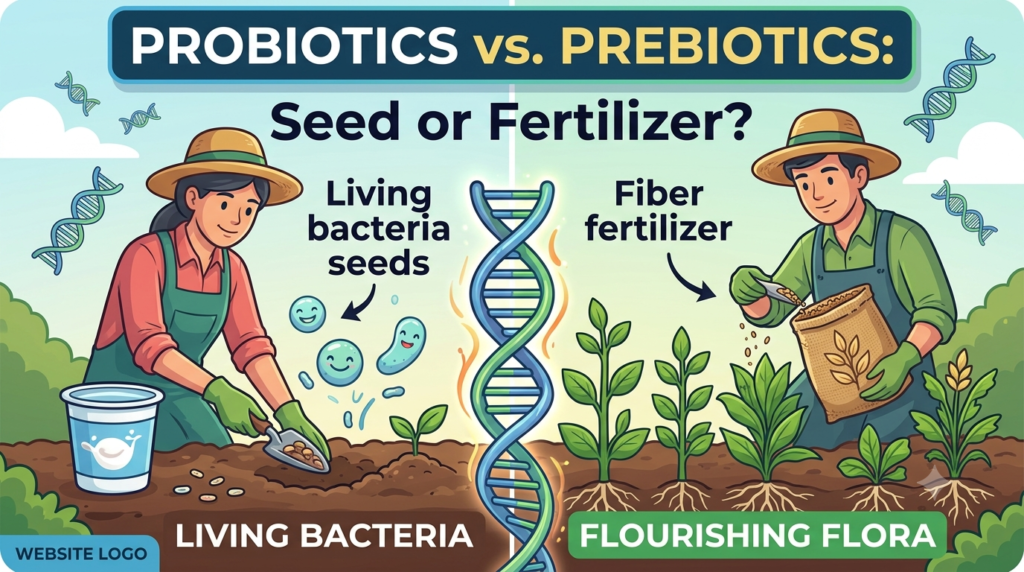
- Role: Live microorganisms that, when consumed in adequate amounts, directly colonize or beneficially influence your gut flora.
- Top Dietary Sources: Live-culture yogurt, kefir, fermented kimchi, sauerkraut, kombucha, and traditional miso.
- When to Supplement: Particularly helpful after finishing a course of antibiotics (which wipe out good and bad bacteria indiscriminately) or when managing IBS under medical guidance.
3. Prebiotics (The Fuel)
- Role: Non-digestible plant fibers that pass through your upper digestive tract unabsorbed. Once they reach the large intestine, beneficial gut bacteria ferment them into Short-Chain Fatty Acids (SCFAs) like butyrate, which protect the gut lining and lower inflammation.
- Top Dietary Sources: Garlic, onions, leeks, asparagus, slightly green bananas, oats, flaxseeds, and chicory root.
4. The Power of “Synbiotics”
Combining prebiotics and probiotics together creates a synergistic effect called synbiotics. For example, eating yogurt (probiotic) topped with sliced bananas and flaxseeds (prebiotics) ensures the beneficial bacteria have immediate nourishment to thrive.
Website Takeaway / Summary: Probiotics introduce good bacteria, but prebiotics keep them alive. Focus on a colorful diet rich in whole plant foods and fermented foods rather than relying strictly on synthetic pill supplements.